

How to Implement Marketing Automation: Step-by-Step Guide for Businesses
One of the most powerful business solutions is marketing automation. It can returns $5.44 for every dollar spent over the first three years on average! Many clients’ posts use automation after taking our video editing service from Marketing Media AI.
What if we walk you through how to implement marketing automation? Clearly, defining your marketing automation strategy can help you avoid common mistakes such as poor data quality and over-automation. Let’s get started!
What is Marketing Automation?
Marketing automation is basically use of software and technology to automate repetitive marketing tasks. Marketers do it through some clinical approach: video posting, email campaigns, social media posting, lead nurturing, and customer segmentation.
Instead of manually handling every step, business managers can set up automation workflows that run seamlessly in the background. For example:
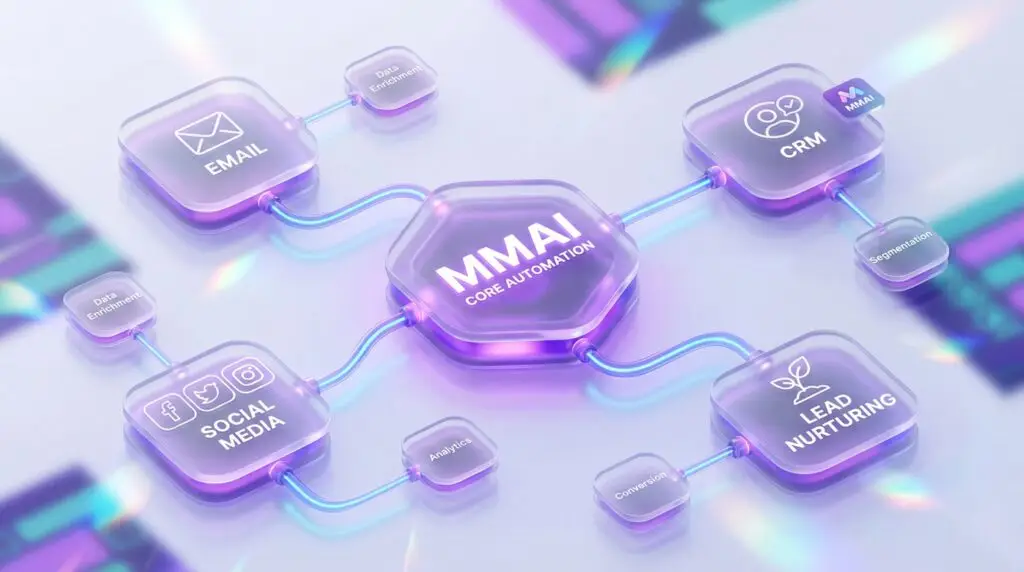
- Email automation can send personalized messages to leads based on their interests and behavior shown to the specific service and products.
- Sales funnel automation ensures prospects move smoothly from awareness to purchase.
- CRM integration creates a unified system that enables sales and marketing teams to collaborate effectively.
Benefits of Marketing Automation
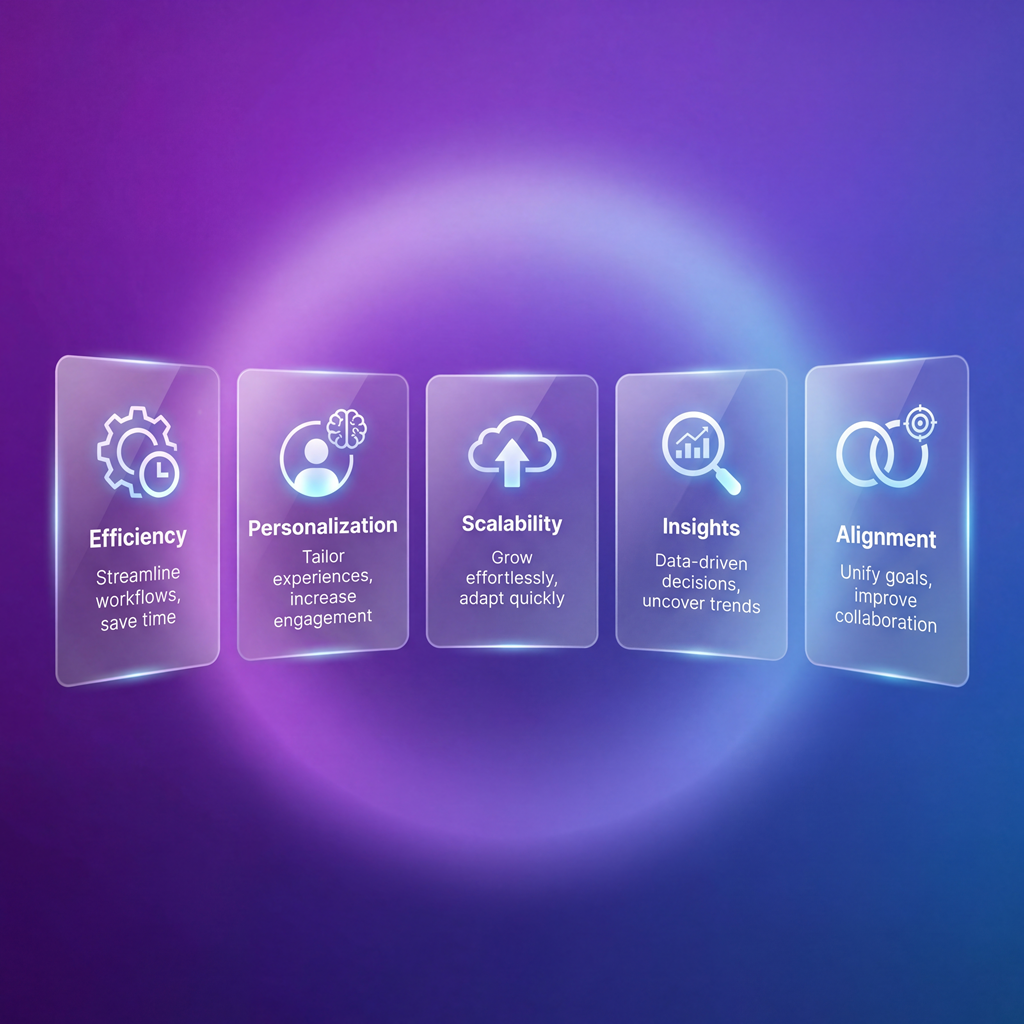
Wait a minute! Before diving into how to implement marketing automation, it’s important to understand the benefits of automation, such as: efficiency, personalization, scalability, insights, and alignment! Let’s explain these a bit more!
|
Efficiency |
Automating repetitive tasks frees up time for strategic work. |
|---|---|
|
Personalization |
Tailored content and lead nurturing automation improve customer engagement. |
|
Scalability |
Campaigns can reach thousands of leads without additional manual effort. |
|
Data-driven insights |
Automation platforms provide analytics to measure performance. |
|
Alignment |
With CRM integration, sales and marketing teams work together seamlessly. |
What’s your take on the benefits? Ultimately, businesses that implement marketing automation can expect higher conversion rates. Besides, they can build stronger customer relationships and improve their ROI.
Step-by-Step Implementation Process
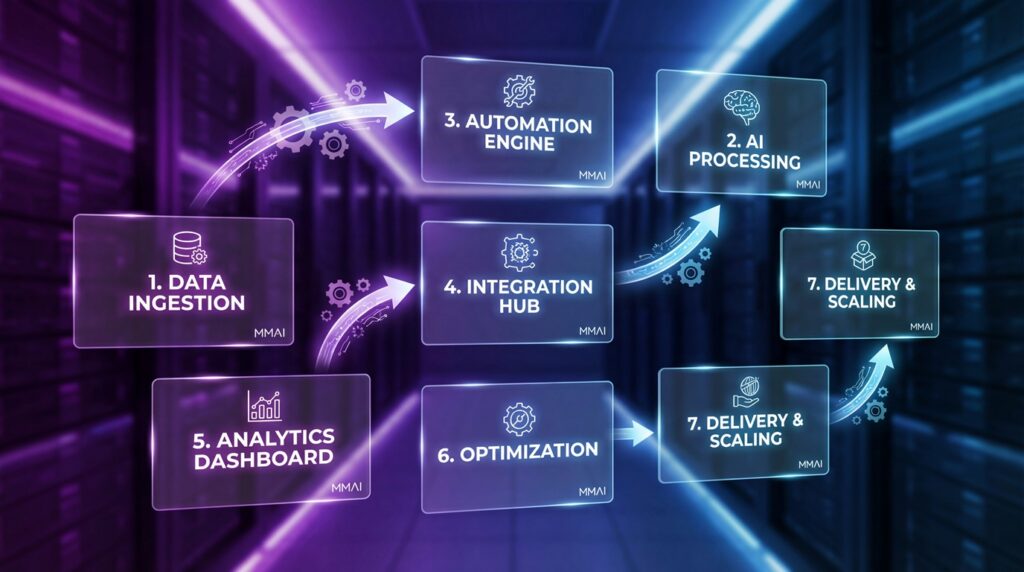
There is a simple 7-step process for successful implementationof automation.
In short, as a sequence:
Goals & Strategy → Define Audience → Choose technology → Segment Data → Build Workflow → Test → Optimize! Done!
Step 1. Define Goals & Strategy
The first step in implementing marketing automation is to establish clear goals. You must be targeting increased lead generation (besides improving customer retention or shortening the sales cycle).
Your marketing automation strategy should align with overall business objectives.A well-defined strategy ensures that automation is purposeful rather than just a set of disconnected workflows.
Step 2. Define Your Audience & Map Journeys
To implement marketing automation effectively, you must understand your audience. Therefore, segment customers based on demographics, behavior, and purchase history. Then, map out their journey from awareness to conversion.
Done all that? Congratulation! You can design automation workflows that deliver the right message at the right time.
Step 3. Choose the Right Technology
Selecting the right automation platforms is one of the important factors here, mate!. Some popular content marketing tools are HubSpot, Marketo, ActiveCampaign, and Mailchimp.
In terms of platforms, some popular video editing solutions are Marketing Media AI, CapCut, and YouTube. The platform you choose should align with your business size, budget, and goals.
Step 4. Clean and Segment Data
A universal truth is that data is the backbone of marketing automation. Poor data quality leads to ineffective campaigns. Before launching, clean your database by removing duplicates and correcting errors.
The best process is updating outdated information.
Next, segment your audience. Segmentation enables personalized automation workflows, ensuring each lead receives relevant communication.
Step 5. Build Workflows and Automations
Welcome! This is where the magic happens. In this step, feel free to create automation workflows that guide leads through the funnel. Is it better understood if you ask about the outcome of the building automation workflow? Yes!
- Email automation sequences for onboarding new customers.
- Lead nurturing automation campaigns that educate prospects.
- Sales funnel automation that triggers offers based on behavior.
Note that each workflow should be designed to move leads closer to conversion while maintaining personalization. After that, your task is to test everything!
Step 6. Integrate and Test
Once workflows are built, integrate your automation platforms with your CRM, website, and other tools. We would say testing ensures that your marketing automation strategy works smoothly before scaling. Here is a quote from our marketing manager in Marketing Media AI:
“Testing is crucial, so run pilot campaigns to identify errors, broken links, or misaligned triggers.”
Step 7. Measure and Optimize
The final step in implementing marketing automation is continuous measurement. Track KPIs such as open rates, click-through rates, conversions, and ROI.
Plus, automation optimization involves refining workflows, updating content, and experimenting with new tactics. That’s it, but we’re not letting you go yet! Let’s dive into the best practice of marketing automation!
What are the Best Practices of Marketing Automation?
- Start Small: Begin with one or two workflows before scaling.
- Personalize Content: Use segmentation to deliver tailored messages.
- Document Processes: Maintain workflow records for consistency.
- Train Your Team: Ensure staff understand how to use automation tools.
Note: Following these best practices ensures that your marketing automation strategy remains effective and sustainable. |
|---|
What are the Common Marketing Automation Mistake?
Marketing automation mistakes can lead to significant financial and operational losses, including up to 12% of revenue. Studies indicate that up to 70% of companies fail to realize the full potential of their marketing automation platforms due to common pitfalls.
Even businesses that know how to implement marketing automation can fall into traps. Avoid these mistakes:
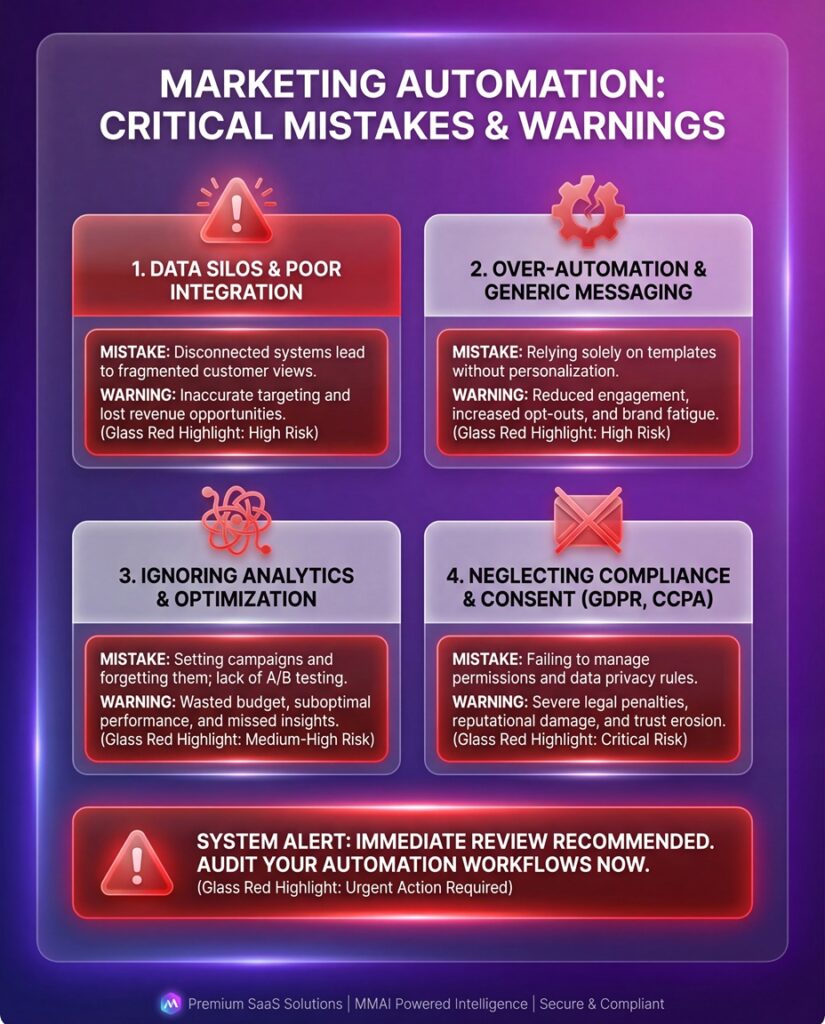
- “Set It and Forget It” Mentality
- Poor Data Quality and Hygiene
- Lack of Personalization/Segmentation
- Over-Automation (Losing the Human Touch)
- Misalignment Between Sales and Marketing
- No Strategic Plan
- Ignoring KPIs
- Ignoring Mobile Optimization
Ask Yourself:
|
|---|
What are the Tools Needed for Marketing Automation?
To implement marketing automation, businesses need the right tools. These tools work together to create a cohesive system that supports your marketing automation strategy. Essential categories are given below in a list:

|
Type |
Tools |
|---|---|
|
Automation platforms |
(HubSpot, Marketo, Mailchimp) |
|
CRM integration |
Salesforce, Zoho CRM) |
|
Email Automation |
Mailchimp, Superhuman, Gmass |
|
Sales Funnel Automation |
Zoho, Britix24, SalesForce, Monday |
Conclusion
Long story short: Learning how to implement marketing automation is a game-changer for businesses. But true success comes after avoiding common mistakes, following best practices, and continuously optimizing.
Many users found video marketing difficult, and we solved that. Likewise, you can solve your marketing issues with automation. Thanks for paying attention so far to the end!