Skip to content

Will AI Take Over Marketing Jobs? Reality, Risks, and Opportunities
Will AI take over marketing jobs? The honest answer is no, but it will change them. AI is already compressing task-heavy work such as drafting, reporting, segmentation, testing, and workflow automation. What it is not replacing at the same speed is strategic judgment, brand positioning, taste, and the ability to understand people.
That distinction matters. At Marketing Media AI, we use AI inside a human-directed workflow because tools can accelerate production, but they still need structure, oversight, and a clear strategic goal. The better question is not whether marketing disappears. It is which tasks get automated, which roles get reshaped, and which skills become more valuable.
How AI Is Used in Marketing Today
AI is already embedded in modern marketing operations. Teams use it to analyze campaign data, generate content variations, personalize emails, summarize research, automate reports, improve ad targeting, and respond to routine customer questions. According to Salesforce’s marketing statistics, 63% of marketers are currently using generative AI.
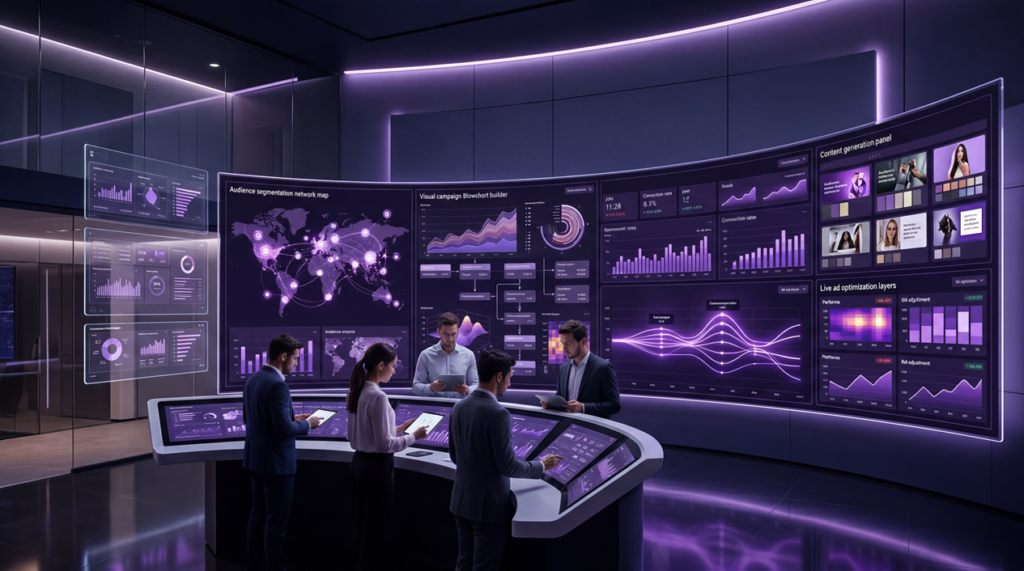
That does not mean AI has replaced marketers. It means the execution layer is getting faster. McKinsey identifies marketing and sales as one of the biggest value pools for generative AI, largely because the technology can speed up content creation, personalization, knowledge work, and operational efficiency at scale.
If you are building automated workflows now, our guide on how to implement marketing automation is a useful next step because automation works best when it is designed as a system rather than added as a pile of disconnected tools.
7 Jobs Most Affected by AI
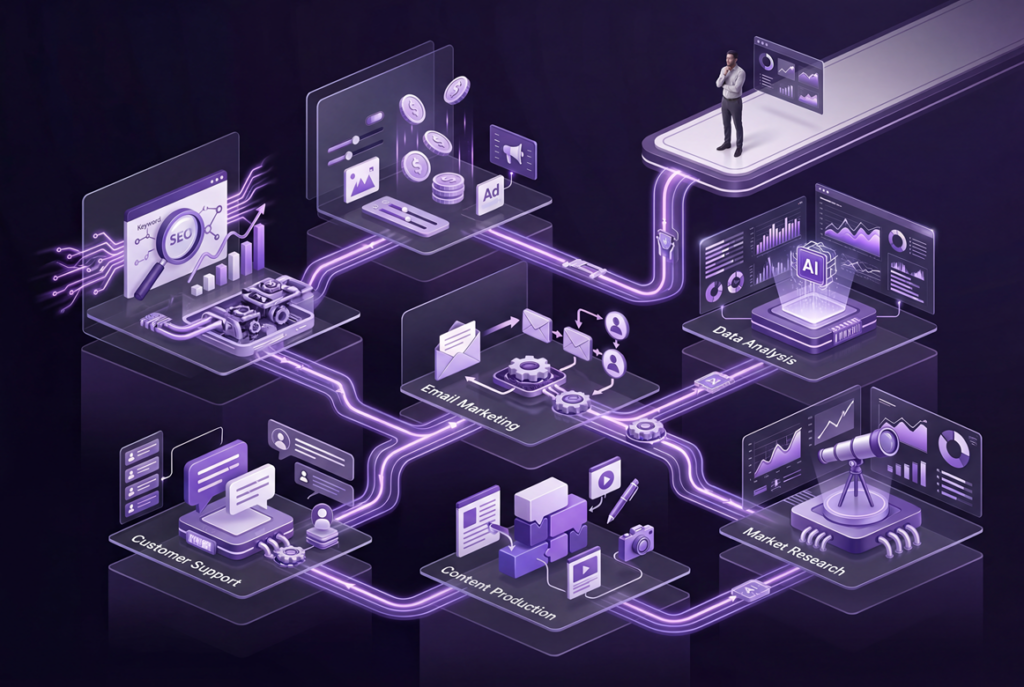
The roles below are not disappearing overnight, but they are under the most pressure because much of their value has traditionally come from repetitive production, pattern recognition, or manual optimization.
1. Data analysts. First-pass reporting, dashboard summaries, anomaly detection, and trend spotting are increasingly automated. Human analysts still matter, but the low-value reporting layer is shrinking.
2. SEO specialists. Keyword clustering, content briefs, technical audits, SERP summaries, and on-page recommendations are now much faster with AI. Strategic SEO, authority building, and editorial judgment still require human direction.
3. PPC campaign managers. Bidding, budget pacing, audience expansion, creative testing, and placement adjustments are increasingly handled by platforms themselves. The role shifts away from button-pushing and toward strategy, offer testing, and interpretation.
4. Email marketing specialists. Segmentation, send-time optimization, subject-line testing, and basic lifecycle workflows can now be handled by automation platforms with far less manual work.
5. Market research assistants. Transcription, survey summarization, qualitative tagging, and early pattern recognition are much faster with AI. That reduces the amount of manual synthesis required for entry-level research work.
6. Content production assistants. Draft outlines, repurposed captions, social copy, summaries, and basic creative variations can be produced in minutes. That raises the standard for human editors and creators who want to stay valuable.
7. Customer support representatives. FAQ handling, first-response routing, and repetitive support conversations are increasingly managed by chatbots and AI agents before a human ever steps in.
The pattern is clear: AI hits execution-heavy roles first. The more repeatable the work, the easier it is to automate. If you are comparing platforms that support those workflows, our breakdown of the best marketing automation software for startups is a practical place to begin.
5 Jobs AI Can’t Replace
AI can support the roles below, but full replacement is far less likely because they depend on judgment, originality, accountability, and real human context.
1. Creative directors. AI can generate options, but it cannot reliably replace taste. Choosing the right concept, emotional tone, visual direction, and message still depends on human judgment.
2. Brand strategists. Strong positioning comes from understanding perception, differentiation, customer psychology, and long-term business direction. AI can assist with research, but it does not own the brand.
3. Public relations managers. Crisis response, reputation management, media nuance, and high-stakes communication require judgment under uncertainty. That is still a human responsibility.
4. Content storytellers. AI can draft text, but meaningful storytelling still depends on voice, context, timing, emotional intelligence, and the ability to recognize what actually resonates with a real audience.
5. Marketing leaders. Leadership requires tradeoffs, decision-making, prioritization, hiring, budget control, and accountability for outcomes. AI can inform those decisions, but it cannot own them.
This is also why Marketing Infrastructure Design matters. Tools can improve speed, but structure, positioning, and direction are still what determine whether marketing performance compounds or stays random.
How Marketers Can Adapt AI in Marketing Jobs
The wrong response is panic. The right response is specialization plus AI fluency. Marketers who understand how to direct AI will outperform marketers who either ignore it or trust it blindly.
That starts with learning how to use AI as a workflow layer rather than a magic button. Get better at prompting, validation, editing, and systems thinking. At the same time, sharpen the skills AI struggles with most: strategic thinking, offer clarity, audience psychology, storytelling, and brand judgment.
It also means building hybrid skills. The marketers who stay valuable will know how to work across analytics, automation, creative development, and performance interpretation. If you are early in that process, start with a clear plan for how to implement marketing automation, then compare the best marketing automation software for startups based on fit rather than hype.
One more point matters: AI can produce generic work very quickly. That creates a new competitive advantage for marketers who can bring sharper positioning, clearer thinking, and a stronger voice. Speed alone is not enough if the output is forgettable.
Future of Marketing Careers with AI
The future of marketing careers with AI will be hybrid, not fully human and not fully automated. The strongest marketers will be the ones who can direct tools, interpret signals, make judgment calls, and keep the brand human.

The World Economic Forum’s Future of Jobs Report 2025 reinforces that point. AI and big data are among the fastest-growing skills, but creative thinking, analytical thinking, resilience, and lifelong learning are also rising in importance. In other words, technical fluency matters more than ever, and human-centered thinking still matters just as much.
That is why the future is not just about automation. It is about reallocation. More mechanical work will be handled by systems, while marketers will be pushed toward strategy, interpretation, creative judgment, customer understanding, and cross-functional decision-making.
That shift will create pressure, especially in junior roles built around repetitive execution. But it will also create opportunity for marketers who can combine AI literacy with clear thinking and strong communication.
Final Words
So, will AI take over marketing jobs? Not in the simplistic way many people fear. It will eliminate some tasks, reshape some roles, and reduce the value of purely mechanical work. But it will also create more demand for marketers who can combine systems thinking, creative judgment, and AI fluency.
The winners will not be the people who reject AI, and they will not be the people who trust it blindly either. They will be the marketers who use AI as leverage while protecting the parts of marketing that still require human intelligence, strategic clarity, and real brand direction.